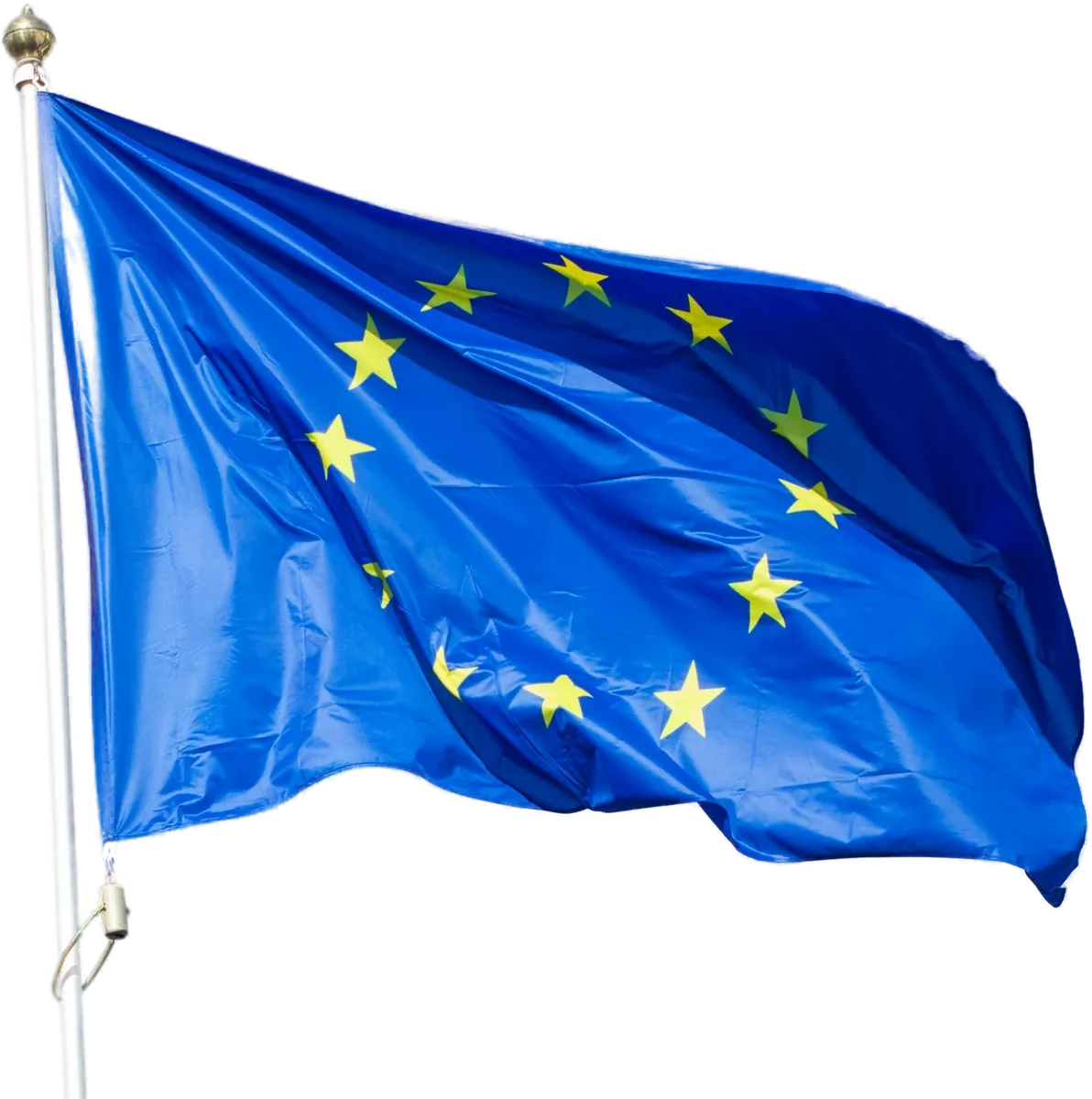
Few European technology projects have carried as much political weight — or attracted as much scepticism — as Gaia-X. Launched in 2019 as a Franco-German answer to the dominance of American cloud giants, it promised nothing less than the foundation for a sovereign European data infrastructure. Six years on, the verdict is genuinely split: concrete technical standards exist, more than 180 data-space projects reference the initiative, and yet prominent critics call it a bureaucratic "paper monster."
This article explains what Gaia-X actually is, what it set out to achieve, why it is so contested, and — most usefully — where it fits into a fast-moving sovereign-cloud landscape that you can act on today, whether or not Gaia-X itself ever delivers.
What Gaia-X actually is (and isn't)
The single most common misconception is worth clearing up first: Gaia-X is not a cloud. It runs no data centres and competes with no one on compute or storage. It is a set of rules, standards, and software components — a "trust framework" — designed to let independent providers and their customers federate: to combine services from many vendors while still knowing exactly who they are dealing with and under which rules.
The initiative was launched by then-economy ministers Peter Altmaier (Germany) and Bruno Le Maire (France) at the 2019 Digital Summit in Dortmund, announced formally in June 2020, and incorporated as a Belgian non-profit association (AISBL) in early 2021 by 22 founding members — 11 German and 11 French. The list reads like a who's-who of European tech and industry: Deutsche Telekom, SAP, Bosch, Siemens, OVHcloud, Scaleway, Orange, Atos, Fraunhofer, and DE-CIX among them. The vision was a shared, trusted layer on top of which a genuinely European data economy could grow.
The goals: sovereignty by design
Gaia-X pursues three intertwined objectives. First, digital sovereignty: keeping control over where data physically resides, who may access it, and which legal jurisdiction ultimately governs it. Second, interoperability and portability, so customers are not locked into a single vendor's proprietary formats. Third, data spaces — sector-specific ecosystems in which companies share data under commonly agreed rules. The flagship is Catena-X in the automotive industry, but similar spaces exist for manufacturing, health, agriculture, and finance.
Why does this matter commercially? Because concentration is real. Three US providers hold roughly 70% of the European cloud-infrastructure market, while European providers together account for only about 15%. That dependence is strategic, not merely economic: providers headquartered in the US remain subject to laws such as the CLOUD Act, which can compel data disclosure regardless of where servers sit. Gaia-X was conceived as the connective tissue that would let European alternatives compete on trust rather than scale alone.
How it works: the trust framework
The technical heart of Gaia-X is the idea of verifiable, machine-readable trust. Providers publish "self-descriptions" — their services described as verifiable credentials following the W3C standard — declaring properties such as data location, ownership structure, and immunity from non-EU access. A compliance service and a registry check these claims, and independent conformity assessment bodies (informally, "clearing houses") validate them.
The promise is that you can query whether a service meets your requirements instead of trusting a marketing brochure. Labels signal escalating levels of sovereignty, up to full immunity from foreign law. Around this sit the Federation Services — identity, catalogue, and data-exchange components, much of it released as open source. It is a genuinely ambitious design. It is also, as critics note, genuinely complex — and complexity has been part of the problem.
The criticism: why so many are frustrated
The most damaging critique concerns membership. Gaia-X opened its doors to the very hyperscalers it was meant to counterbalance — Microsoft, Google, and AWS all joined — and critics describe this as a Trojan horse that diluted the mission from within. Frank Karlitschek, founder of Nextcloud, dismissed the project in 2024 as a "paper monster": abundant documentation, few shipped products. Others, including engineer Bert Hubert, have called it an expensive distraction that has absorbed attention and funding better spent building real infrastructure.
There is a fair counterpoint. Standards work is slow, unglamorous, and easy to caricature, and the 180-plus data spaces that reference Gaia-X are not nothing. But the honest assessment in 2026 is that end-user adoption remains thin, the initiative is well behind its original timeline, and its governance has often felt heavier than its output.
The regulatory backdrop that matters more
Gaia-X does not exist in a vacuum, and for most businesses the surrounding regulation has more immediate teeth. The 2020 Schrems II ruling invalidated the Privacy Shield transfer mechanism; the EU-US Data Privacy Framework restored a legal basis for transatlantic transfers in 2023, but it remains legally fragile and could be challenged again. On top of the GDPR sit the DMA, DSA, NIS2, and the Data Act.
Two developments deserve particular attention. The EUCS cloud cybersecurity certification scheme was originally meant to include hard sovereignty criteria — an EU headquarters, EU data storage, and immunity from foreign access — at its highest assurance level. After heavy lobbying, those requirements were stripped out of the March 2024 draft and replaced with a lighter self-attestation. Meanwhile the Data Act's cloud-switching rules (Chapter VI, in force since September 2025) give you concrete leverage: short notice periods, standardised interfaces and formats, and the phasing-out of switching fees entirely by 2027. That regime does more to reduce lock-in than any Gaia-X label.
Where it stands in 2026
Under CEO Ulrich Ahle, Gaia-X has reframed its 2024 strategy around adoption, market readiness, globalisation, and ecosystem growth, with Ahle arguing plainly that the highest level of sovereignty can only come from providers headquartered in Europe. Around it, momentum is building independently. The EuroStack coalition — Nextcloud, IONOS, Ecosia, and economist Cristina Caffarra among its voices — is pushing a "buy European" agenda, and the market is following: sovereign-cloud revenue in Europe is projected to grow from roughly EUR 20 billion today to over EUR 100 billion by 2031, with around 60% of Western-European CIOs saying they want to increase their use of local providers.
The public sector is providing the most visible proof points. Schleswig-Holstein is migrating some 30,000 workstations off Microsoft to LibreOffice, Thunderbird, Open-Xchange, and Nextcloud, expecting to save on the order of EUR 15 million a year, while Germany's openDesk project (via the ZenDiS agency) packages open-source tools for administrations nationwide. Watch also the ambiguous middle: offerings like Delos and Bleu wrap Microsoft technology in European operation, exposing the real tension between "European-operated" and "European-owned."
What this means for you: practical takeaways
Do not wait for Gaia-X to mature before acting. Treat it as a useful vocabulary — for portability, labels, and verifiable claims — rather than as a product you can buy. The practical moves are clearer than the politics. First, map your dependence: which providers hold your data, and which jurisdictions can they be compelled to answer to? Second, use the Data Act's switching rights to build exit paths into new contracts and reduce lock-in from the outset.
Third, evaluate genuinely European alternatives on their merits: IONOS, OVHcloud, Scaleway, or Hetzner for infrastructure; Nextcloud, Open-Xchange, and LibreOffice for the digital workplace — many of them catalogued in this directory. Fourth, learn to distinguish sovereignty from "sovereignty-washing": an EU-operated service owned by a US parent sits at a very different point on the spectrum than an independent European provider. Sovereignty is not binary; decide how much you actually need for each workload. Gaia-X may or may not fulfil its promise — but the European market it was meant to catalyse is finally moving, with or without it.